.png)

Dental and Vision Benefits for Small Business Owners
Dental and vision benefits are defined as employer-sponsored coverage plans that pay for routine oral care and eye care, separate from major medical insurance. For small businesses, these plans are the most cost-effective way to build a competitive benefits package. Dental and vision plans deliver meaningful returns with relatively low investment, improving both recruitment and retention. 83% of U.S. adults report that oral health is important to them, which means dental coverage is one of the most noticed and regularly used benefits you can offer your team.
What are the typical costs of dental vision benefits for small business?
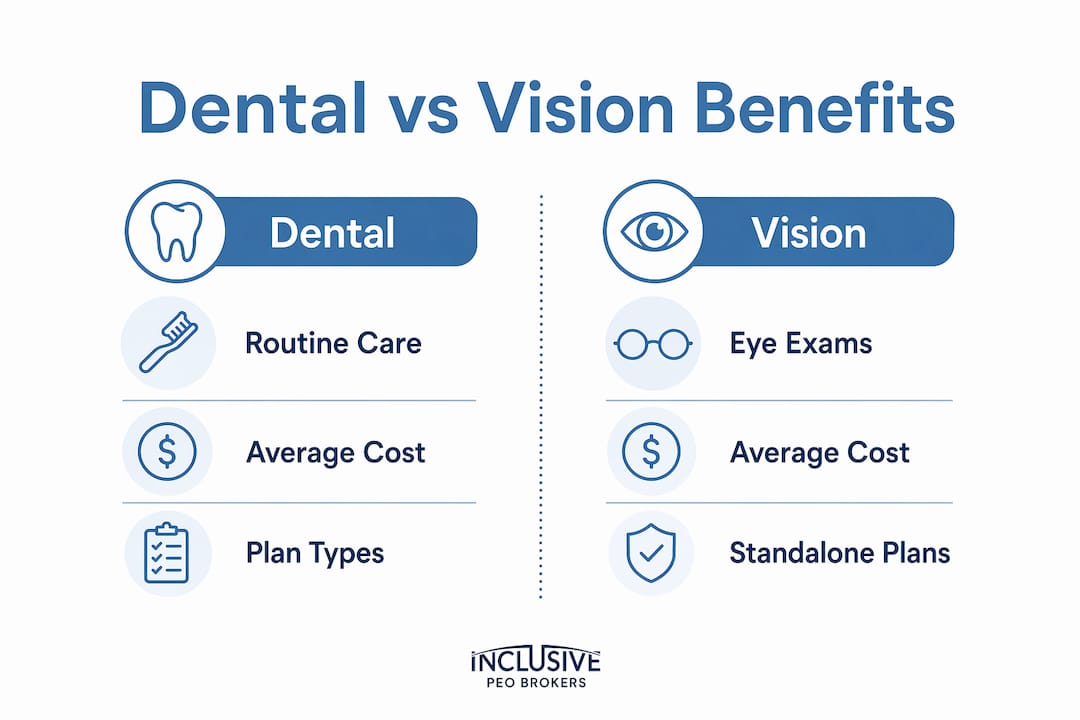
Dental and vision coverage costs far less than most small business owners expect. Employer-paid dental insurance typically runs between $26 and $52 per employee per month, while vision insurance ranges from $5 to $15 per employee per month. To put that in perspective, major medical premiums for a single employee can exceed $600 per month. Dental and vision together often cost less than 10% of that figure.
Plan types and funding models
Three main plan structures apply to small business dental plans: fully insured PPO plans, voluntary plans, and self-funded Administrative Services Only (ASO) plans.

| Plan Type | Best For | Key Advantage |
|---|---|---|
| Fully insured PPO | Groups under 50 employees | Predictable monthly cost, low financial risk |
| Voluntary (employee-paid) | Budget-constrained employers | No direct employer cost; group rates still apply |
| Self-funded ASO | Groups over 50 employees | Saves 10–20% by avoiding state taxes and carrier margins |
| Bundled with medical | Employers with existing group medical | Simplified administration, integrated claims |
Self-funded ASO dental plans avoid state premium taxes and carrier profit margins, saving groups over 50 employees between 10% and 20% on annual dental spending. For businesses under 50 employees, fully insured plans reduce financial unpredictability and are the standard starting point.
On the vision side, standalone vision plans are often the lowest-cost enhancement you can add. Standalone vision plans are frequently offered as low-cost additions when medical premiums rise, giving employees a tangible benefit without straining the employer budget. Many carriers, including Guardian and MetLife, offer combined dental and vision quotes that simplify the purchasing process for small groups.
Small businesses with fewer than 25 full-time equivalent employees may also qualify for the Small Business Health Care Tax Credit under the Affordable Care Act, which can offset a portion of premium contributions. Consulting a benefits broker before selecting a plan helps you identify which tax advantages apply to your situation.
How to select dental and vision plans that fit your workforce
Selecting the right plan goes well beyond comparing monthly premiums. Employers should evaluate coverage details such as annual maximums, waiting periods, provider networks, and orthodontia riders, because focusing only on premium costs can mislead you about the plan’s real value to employees.
Here are the core design elements to audit before committing to any plan:
- Annual maximum: Most dental PPO plans cap coverage at $1,000–$2,000 per year. Higher maximums matter most for employees with families or existing dental needs.
- Waiting periods: Some plans impose 6–12 month waiting periods for major services like crowns or root canals. Look for plans with no waiting periods on preventive care.
- Provider network depth: A large network means employees can keep their current dentist or eye doctor. Narrow networks reduce premiums but increase friction.
- Orthodontia riders: If your workforce includes younger employees or parents, orthodontia coverage adds significant perceived value at a modest cost increase.
- Vision allowances: Check the annual allowance for frames and lenses. A $150 frame allowance versus a $200 allowance is a real difference employees notice at the point of purchase.
Employee demographics shape the right plan design. A workforce of mostly younger employees in their 20s and 30s will prioritize orthodontia and vision benefits. An older workforce may value higher dental maximums and coverage for restorative procedures. Surveying your team before selecting a plan takes less than 30 minutes and prevents costly mismatches.
Bundling dental and vision with medical coverage supports integrated claims processing and simplifies HR administration. However, if your medical premiums are already high, adding standalone dental and vision as separate voluntary plans keeps costs visible and manageable.
Pro Tip: Do not evaluate plans on premium alone. Calculate the total annual contribution per employee, including employer share and out-of-pocket maximums, to get an accurate picture of plan value.
How to implement dental and vision benefits step by step
Implementation does not need to be complicated. A clear process gets your team covered without disrupting daily operations.
-
Assess your workforce and budget. Count your eligible employees, determine whether you want to pay 100% of premiums or share costs, and set a monthly per-employee budget before requesting any quotes.
-
Request quotes from multiple carriers. Contact at least three carriers or work with a benefits broker who can pull quotes from Guardian, Delta Dental, VSP, and EyeMed simultaneously. Comparing three or more quotes typically surfaces meaningful price differences.
-
Choose your plan structure. Decide between fully insured, voluntary, or a cost-sharing arrangement. For most businesses under 50 employees, a fully insured PPO dental plan paired with a standalone vision plan from VSP or EyeMed is the most practical starting point.
-
Integrate with your HR and payroll systems. Benefits administration platforms like Rippling, Gusto, or a Professional Employer Organization (PEO) handle enrollment, deductions, and carrier reporting automatically. A PEO, in particular, gives small businesses access to large-group rates that are otherwise unavailable to firms with fewer than 50 employees.
-
Set an open enrollment window. Give employees at least two weeks to review plan options, ask questions, and enroll. Rushing enrollment leads to low participation and dissatisfied employees who feel they missed out.
-
Communicate benefits clearly and repeatedly. Clear employee communications increase understanding and actual use of dental benefits. Send a one-page summary of what is covered, what it costs employees, and how to find an in-network provider.
-
Review plan performance annually. Utilization data from your carrier shows which benefits employees actually use. Low utilization on a specific benefit signals either poor communication or a poor plan fit.
Pro Tip: If you are setting up benefits for the first time, a PEO can cut your administrative workload significantly. Inclusive PEO Brokers has completed 133 successful implementations, and clients save an average of 80 hours in the selection process alone.
What are the measurable benefits of offering dental and vision coverage?
The business case for employee dental benefits and vision insurance is direct and well-supported. Companies with combined dental and vision plans report 25% lower employee turnover compared to businesses that offer neither. Lower turnover translates to lower recruiting costs, faster team productivity, and stronger institutional knowledge.
Beyond retention, these benefits shape how employees perceive their employer day to day.
- Regular utilization: Employees use dental and vision benefits multiple times per year. That frequency keeps your benefits package top of mind in a way that major medical coverage, used mainly in emergencies, does not.
- Whole-person health: Integrating dental and vision with medical benefits supports better overall employee health management. Oral health is directly linked to cardiovascular disease risk, and untreated vision problems reduce workplace productivity.
- Employer reputation: Offering dental and vision coverage signals that you invest in your team’s well-being. That reputation matters in recruiting, especially when competing against larger employers.
- Productivity gains: Employees who address dental pain or vision problems early miss fewer workdays and perform better on tasks requiring focus and concentration.
“Dental and vision benefits act as maintenance benefits providing immediate and regular value, helping build employer reputation as a choice workplace more effectively than infrequently used medical benefits.” — Frost Insurance
The role of dental vision benefits strategy extends beyond cost management. When employees feel their health needs are covered, engagement and loyalty follow. For small businesses competing against larger firms on compensation, a strong benefits package is often the deciding factor in a candidate’s choice.
Key Takeaways
Dental and vision benefits are the highest-return, lowest-cost additions a small business can make to its employee benefits package.
| Point | Details |
|---|---|
| Affordable entry cost | Dental runs $26–$52 per employee monthly; vision runs $5–$15, far below medical premiums. |
| Plan type matters | Groups under 50 should use fully insured PPO plans; groups over 50 can save 10–20% with ASO plans. |
| Design beyond premiums | Audit annual maximums, waiting periods, network depth, and orthodontia before selecting any plan. |
| Retention impact | Integrated dental and vision plans correlate with 25% lower employee turnover rates. |
| Communication drives value | Clear, repeated benefit communication directly increases employee utilization and satisfaction. |
My honest read on dental and vision benefits for small businesses
I have worked with enough small business owners to know that most of them underestimate how much these benefits matter to employees. The conversation usually starts with “we can’t afford it,” and then we look at the actual numbers together. Dental and vision coverage for a team of 10 employees can cost less than $700 per month total. That is less than one month of a single bad hire.
What I find more interesting is the shift toward value-based dental care in 2026. Carriers are moving toward plans that reward prevention and early intervention rather than just paying for procedures after problems develop. That model lowers long-term costs for employers and produces better health outcomes for employees. If you are selecting a new dental plan right now, ask carriers specifically about their preventive care incentives.
The other thing I see consistently is poor communication after enrollment. Employers spend time selecting a good plan and then send one email during open enrollment. Employees forget what is covered, avoid using benefits, and then tell exit interviewers that the company “didn’t really offer much.” The plan was fine. The communication was not. Reviewing your employee benefits strategy annually and refreshing your communications each year is not optional if you want these benefits to actually move the needle on retention.
— John
How Inclusive PEO Brokers simplifies your benefits setup
Selecting and managing dental and vision benefits takes time that most small business owners do not have. Inclusive PEO Brokers connects you with the right Professional Employer Organization to handle benefits administration, carrier negotiations, and employee communications on your behalf.

Through a PEO, your small business gains access to large-group dental and vision rates that are typically unavailable to firms under 50 employees. Inclusive PEO Brokers has guided 133 successful implementations, saving clients an average of 80 hours in the selection process and $634 in costs. If you are ready to offer dental and vision benefits without the administrative burden, Inclusive PEO Brokers is the right starting point. You can also explore first-time PEO selection to understand exactly what the process looks like before you commit.
FAQ
How much do dental and vision benefits cost a small business?
Dental coverage costs between $26 and $52 per employee per month, and vision coverage costs between $5 and $15 per employee per month. Both are significantly more affordable than major medical insurance premiums.
What type of dental plan is best for a business under 50 employees?
Fully insured PPO dental plans are the standard choice for groups under 50 employees because they offer predictable monthly costs and protect against financial risk from high claims.
Can small businesses offer dental and vision benefits without a broker?
Yes, but working with a benefits broker or PEO gives you access to group rates, carrier comparisons, and administrative support that most small businesses cannot replicate independently.
Do dental and vision benefits actually reduce employee turnover?
Companies that offer integrated dental and vision plans report up to 25% lower employee turnover compared to those that offer neither, making these benefits one of the most cost-effective retention tools available.
Should dental and vision be bundled with medical or kept separate?
Bundling with medical simplifies administration and supports integrated health management. Standalone dental and vision plans are a practical alternative when medical premiums are already high and budget visibility matters.
Recommended
.svg)
Seeking a different solution? Meet Your Business Needs